Proactive monitoring is the core function of an IT outsourcing contract: without it, an IT service provider cannot anticipate incidents before the client does.
Infologo, an IT service provider based in Lausanne and Geneva, has been helping small and medium-sized businesses in French-speaking Switzerland manage their infrastructure since 2008. Of the 14 infrastructure audits conducted between 2023 and 2025, 11 revealed a lack of monitoring or improper configuration. This is not a market anomaly. It is a systemic blind spot.

Proactive IT Outsourcing vs. Reactive IT Outsourcing: The Practical Difference
A proactive IT outsourcing contract is one in which the IT service provider detects and resolves issues before they cause an outage.
A reactive contract, on the other hand, triggers an intervention after the customer has identified the problem. The difference is not one of degree; it is a difference in nature.
What the customer is buying in a managed service contract is monitoring. They aren’t paying for someone to come and put out a fire. They’re paying to be notified that the stove has been running abnormally hot for the past twenty minutes. When that alert doesn’t exist—because monitoring isn’t active—the contract provides reactive support, regardless of the marketing label.
So the question isn’t “Do you have a managed service contract?” but “Is your monitoring active, configured, and tested on every piece of managed equipment?”
How Does Server Monitoring with PRTG Work for Small and Medium-Sized Businesses?
PRTG Network Monitor is the tool Infologo uses to continuously monitor the infrastructure of its SMB clients. It analyzes dozens of metrics on managed servers and devices in real time, including available disk space, CPU load, service availability, backup status, network traffic, and device temperature.
The way it works is simple: alert thresholds are set in advance for each piece of equipment. When a threshold is exceeded, an alert is automatically generated and sent to the technical team before the situation escalates.
Infologo configures these thresholds based on each server’s profile. On a standard server, the disk alert is triggered at 75% capacity. On a server identified as vulnerable or already experiencing issues, this threshold drops to 65%. Known vulnerabilities require heightened vigilance, not the same level of vigilance as the average for the server fleet.
Without an active and properly configured PRTG, a technician can’t see any more than the customer can.
What Happened at a Client’s Site and Why It’s a Textbook Example
During a PRTG deployment at a customer site, technical reboots related to the installation were reported. Monitoring was not yet active on that server. The server in question had been identified as vulnerable during a previous visit—information documented in the client file—but this had not yet been translated into operational monitoring.
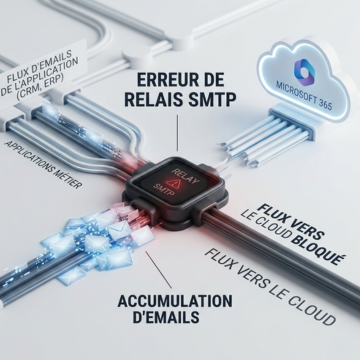
In just a few minutes, 50 GB had accumulated. Total saturation. Client-side freeze. Immediate call requesting an explanation.
What should have happened: a PRTG alert at 65% disk capacity, triggered several hours before the disk became full, with preventive action taken before any visible incident occurred. What actually happened: a task considered “background” had been postponed. Monitoring was on hold. The server, however, wasn’t waiting.
The customer reacted very quickly. That’s to be expected. Any customer who discovers a system failure before their IT service provider does has every reason to question the value of the contract they’re paying for. The right response isn’t a technical explanation. It’s a reevaluation of the priority given to monitoring within internal processes.
Why is monitoring consistently given low priority?
This is a trend we see in many IT teams, including those at reputable service providers: PRTG is treated as a background tool, a task that’s configured “when there’s time,” in between urgent tickets. This perception is wrong, and it’s costly.
Monitoring is not a reporting tool. It is a monitoring infrastructure. Without it, the entire promise of proactivity in a managed service contract relies on manual checks, habit, and luck. A technician who defers the restarts required for the PRTG deployment is not making a trivial decision. Without realizing it, they are delaying the implementation of the only layer that would allow them to anticipate problems. The rest of the contract is running on empty.
What We Do at Infologo
Deploying PRTG is a top priority in our contractual obligations, not a secondary task. Before any other changes are made to a managed server, monitoring must be active and tested. If reboots are required to complete the installation, they must be performed before anything else, not after.
For any server identified as vulnerable, alert thresholds are lowered upon onboarding. We document this adjustment in the client file, along with the associated justification.
A managed service contract that cannot answer the question, “When did you receive the last PRTG alert on this server, and what was it about?” is not a managed service contract. It is a support contract with optional monitoring. That’s not what we sell, and it’s not what our customers buy.
If you have any questions about the level of monitoring currently in place for your infrastructure, please contact us for a no-obligation audit of your monitoring configuration.